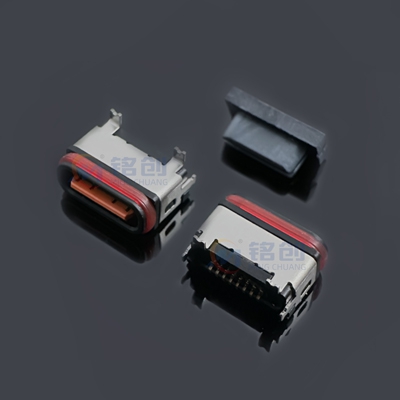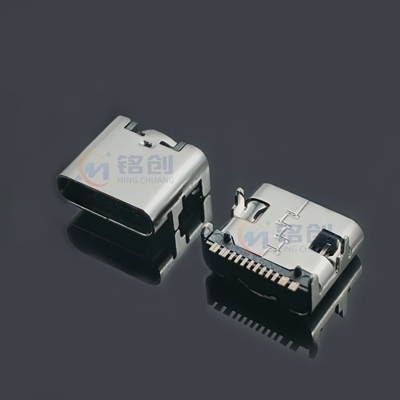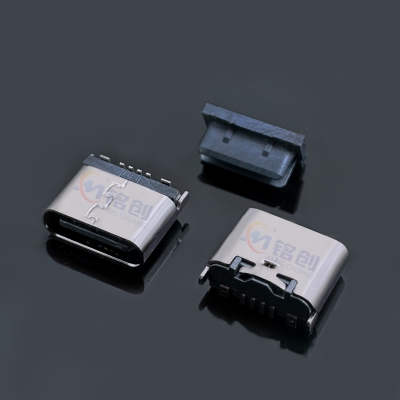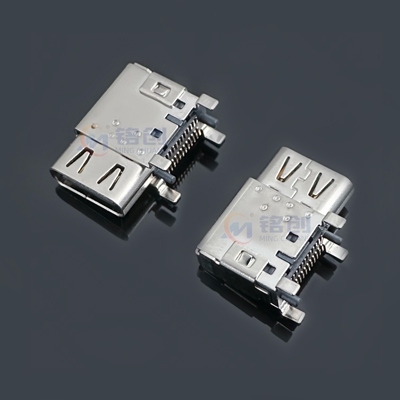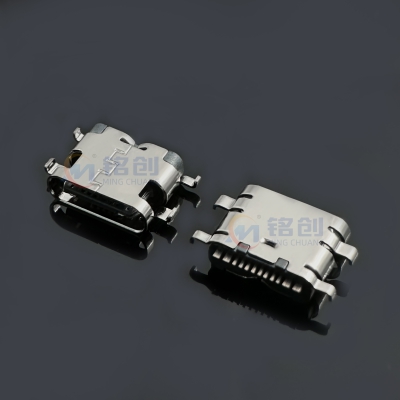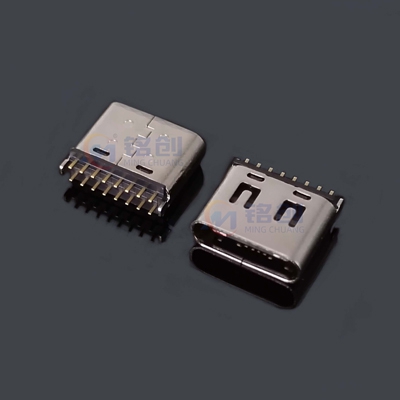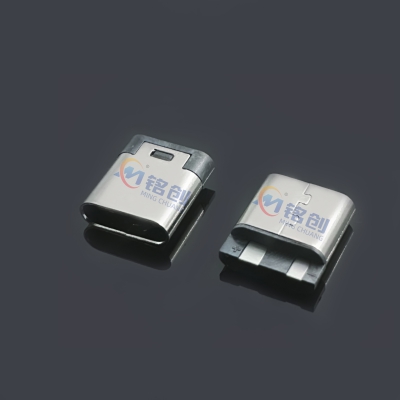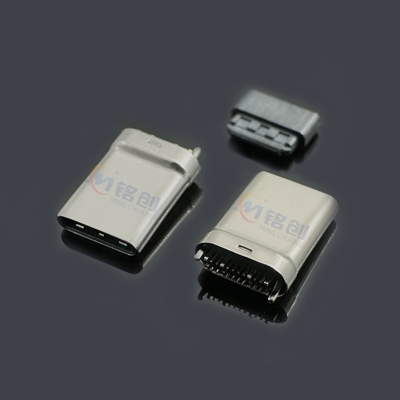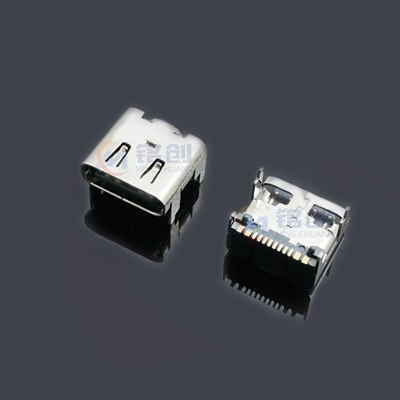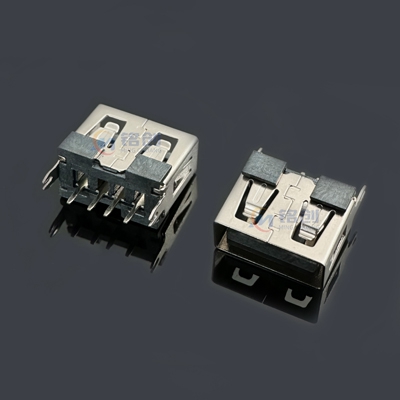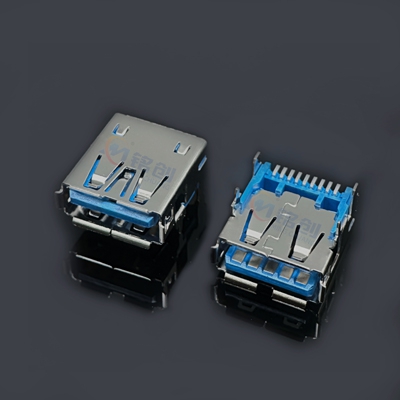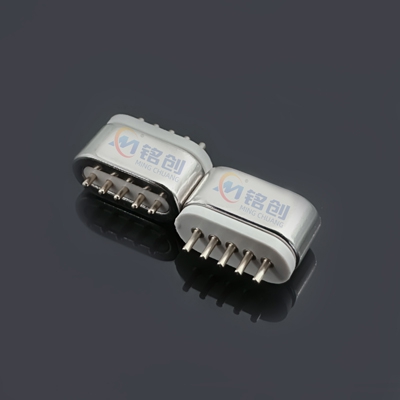
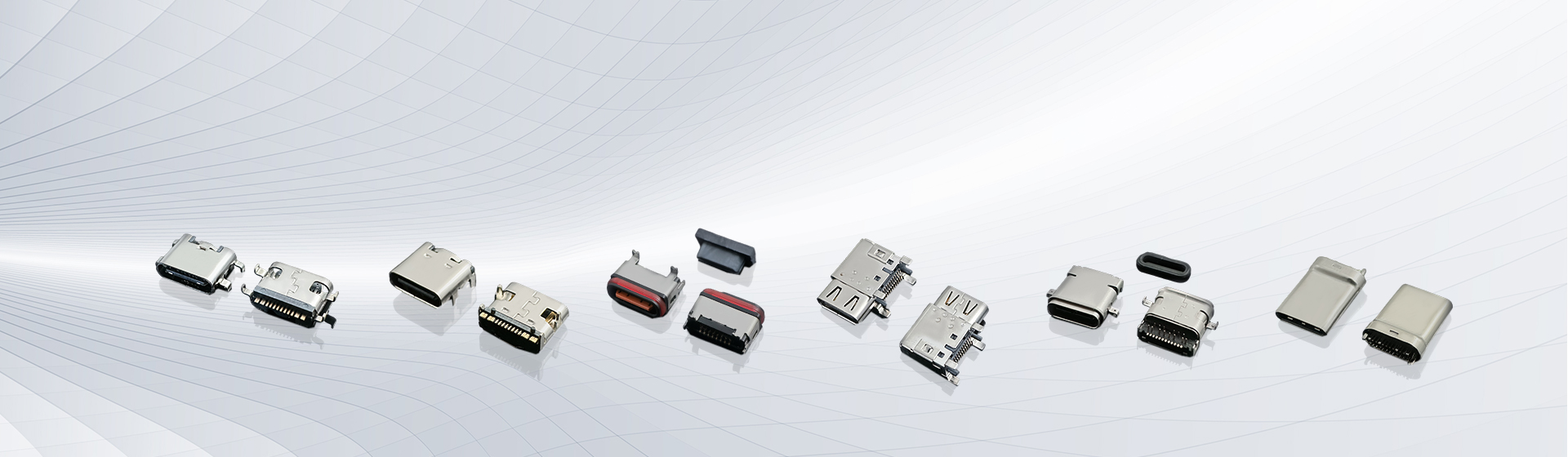
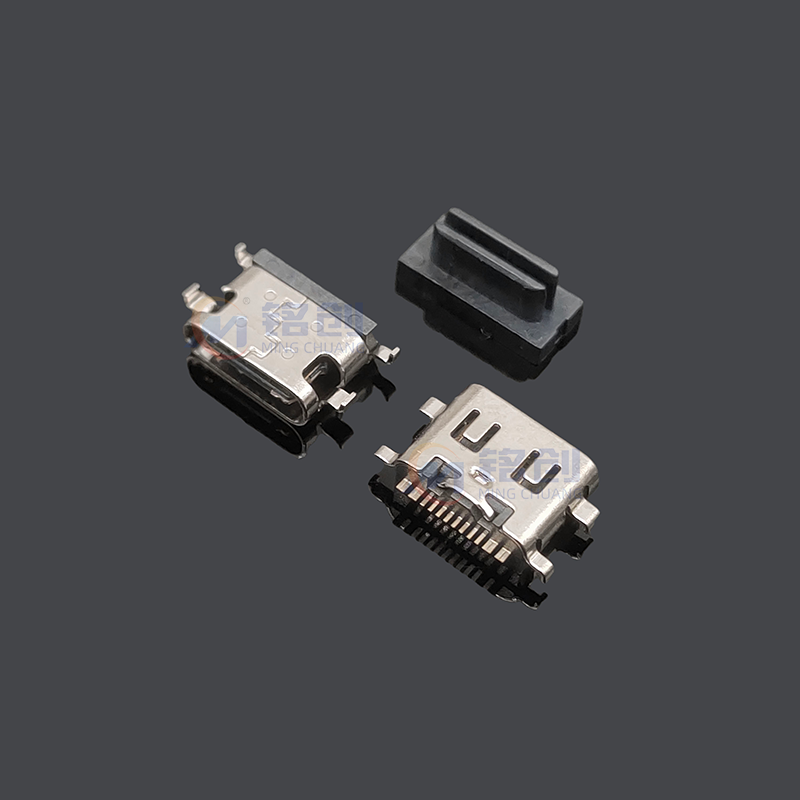
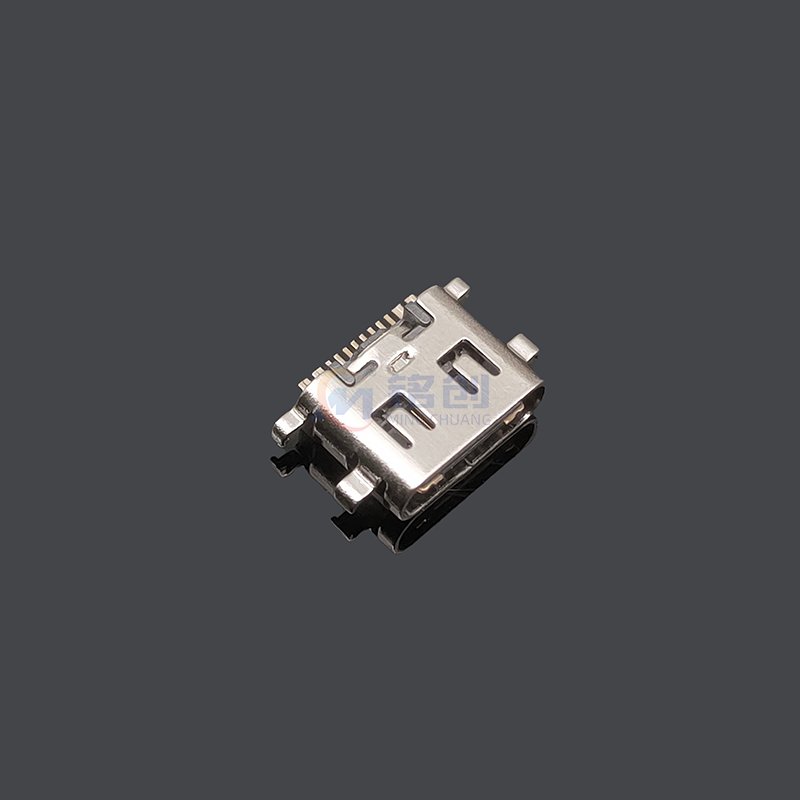
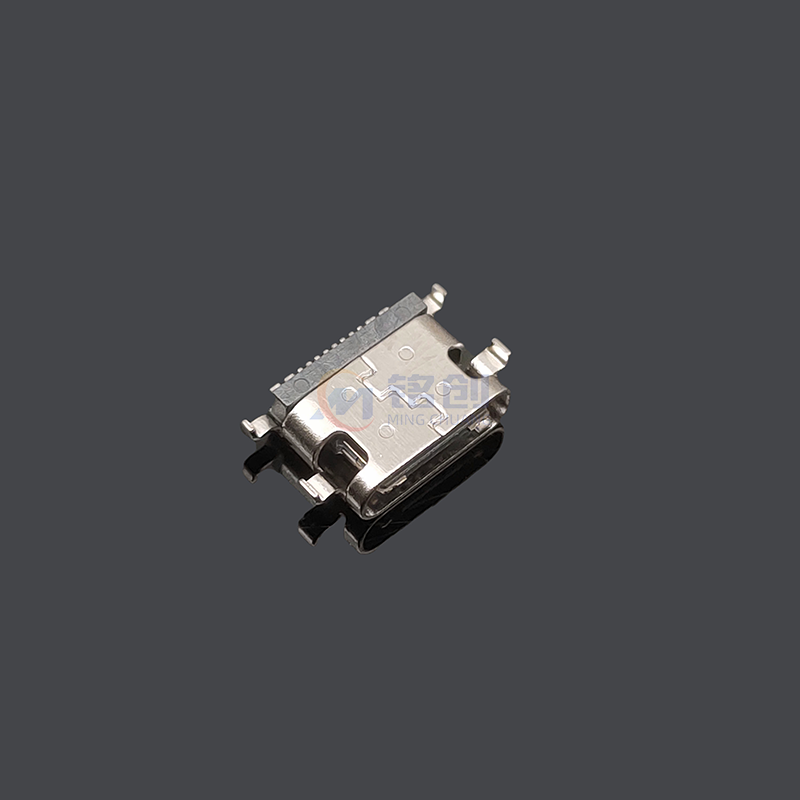


TYPE C female seat 16PIN sinking board 1.6 four pin plug-in board SMT L=6.5 with spring 5A current is a high-performance USB-C connector designed specifically for compact electronic devices. Its core design goal is to solve the contradiction between space limitations and high-power transmission. This product significantly reduces the vertical footprint of the interface on the PCB board through a 1.6mm sunken packaging structure, making it suitable for thickness sensitive fields such as smartphones, tablets, and wireless charging modules. Its single row 16 pin SMT layout combined with four pin DIP soldering design not only meets the high-density mounting requirements, but also increases the solder filling area through the front two pin perforated design,
improving the soldering firmness.
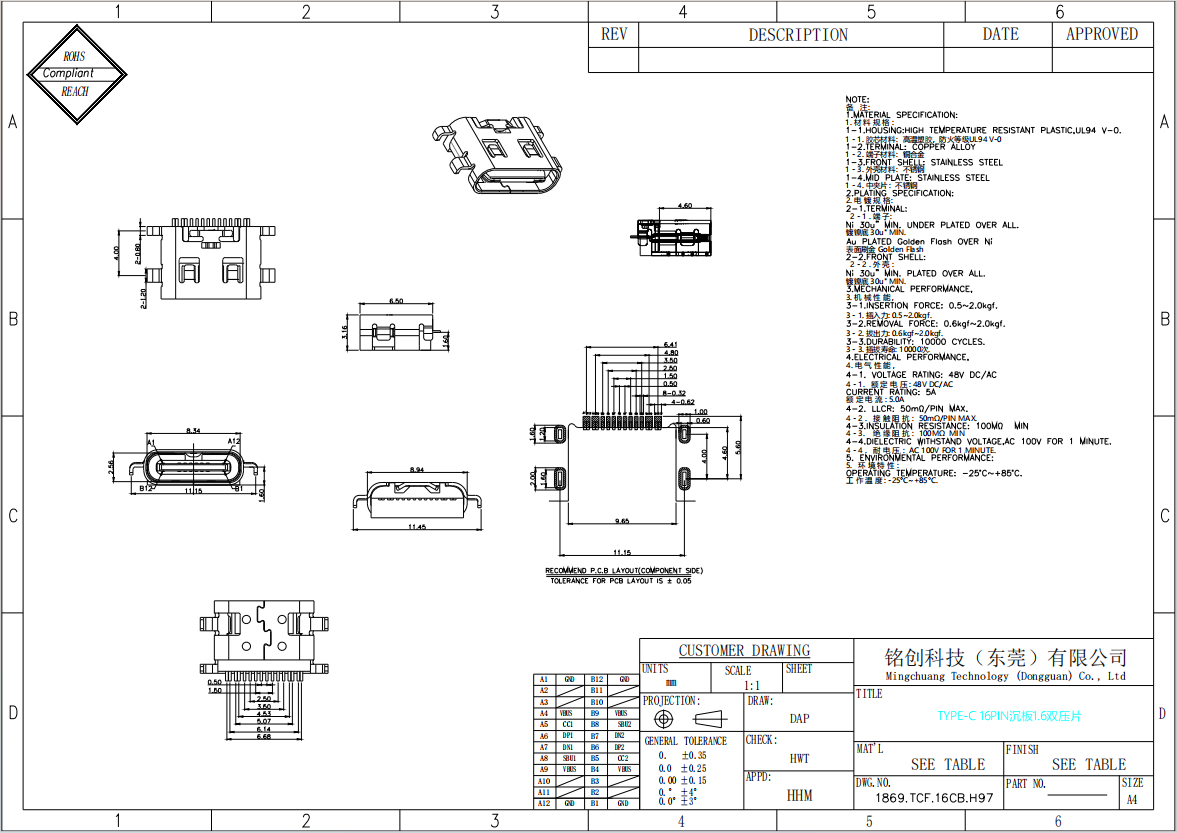
Environmental Protection and Safety Certification
RoHS and halogen-free: Plastic materials comply with RoHS 2.0 and HF halogen-free standards, and have passed UL94 V-0 flame retardant certification
(vertical combustion self extinguishing time ≤ 10 seconds).
Industry standards:
The full pin design complies with the USB Type-C 1.3 specification and supports USB 3.1 Gen2 data transfer (5Gbps).
Some models are certified by the USB-IF Association (TID numbers can be customized) to ensure protocol compatibility.
Production quality control
Coating detection: X-ray fluorescence spectrometer (XRF) is used to detect the thickness of the gold layer ≥ 0.8 μ m and the thickness of the tin layer ≥ 3 μ m,
ensuring corrosion resistance and welding reliability.
Process control:
The PPAP document (including FMEA and CPK analysis) covers the entire process from raw materials to finished products.
Laser marking traceability system supports batch traceability to production time and raw material suppliers.
Waterproof model expansion
IPX7/IPX8 Waterproof: Designed with nano injection molded rubber rings and laser welded casing, it supports immersion in water for 30 minutes at 1 meter
(IPX7) or 1 hour at 2 meters (IPX8).
Test standard: Meets the waterproof rating requirements of IEC 60529, and has no corrosion in salt spray test (5% NaCl solution, 48 hours).
Design and Welding
PCB layout avoidance:
Avoid placing high-frequency signal lines below the sinking area to prevent electromagnetic interference.
The hole diameter of the four pin plug-in board solder pad should be strictly matched to 0.8 millimeters. If it is too small, it may cause the pins to bend, and
if it is too large, the solder filling will be insufficient.
Welding process parameters:
The peak temperature for reflow soldering is 245 ℃± 5 ℃, and the preheating time is 60-90 seconds to prevent thermal deformation of the LCP core.
Wave soldering requires the use of fixtures to cover the interior of the interface to prevent molten tin from infiltrating and causing short circuits.
Usage and maintenance
Plug and unplug operation specifications:
The plug should be fully aligned with the female tongue, with a tilt angle of ≤ 3 ° to avoid terminal bending.
It is recommended to plug and unplug no more than 50 times a day, as overloading may cause fatigue fracture of the steel plate.
Environmental adaptability:
Non waterproof models should avoid environments with humidity>90% or dust, and it is recommended to install dust covers.
The working temperature range is -25 ℃ to 85 ℃. Exceeding this range may cause the rubber core to become brittle or soften.
Troubleshooting and Maintenance
Handling of poor contact:
Check the oxidation condition of the terminals and clean the contacts with electronic cleaner (such as CRC 2-26).
If the impedance is abnormal, it is necessary to re solder the four pin plug board or replace the female socket.
Welding point cracking repair:
Use low-temperature soldering (melting point 138 ℃) for local repair welding to avoid high temperature damage to the rubber core.
When the cracking is severe, the mother socket needs to be replaced and the PCB solder pads should be checked for detachment.
Heat dissipation and current management
Heat dissipation design:
Under a continuous current of 5A, it is recommended to add 2oz copper thickness and heat dissipation vias at the bottom of the PCB.
The contact surface between the shell and the heat sink can be coated with thermal conductive silicone grease (thermal conductivity ≥ 3W/m · K).
Overcurrent protection:
Suggest connecting a recoverable fuse (such as PPTC, with a trigger current of 6A) in series on the VBUS line.
Paired with an intelligent power distribution chip to achieve dynamic current adjustment.


|
Mob:13310802726 / Tel:0769-85605360 |

|
Email:mc13310802726@163.com |

|
Address: No. 1, Chengxin Road, Changan Town, Dongguan City, Guangdong Province, China |

Copyright © 2024-2026 Mingchuang Technology (Dongguan) Co., Ltd. All rights reserved Web Design—Quanfang Network